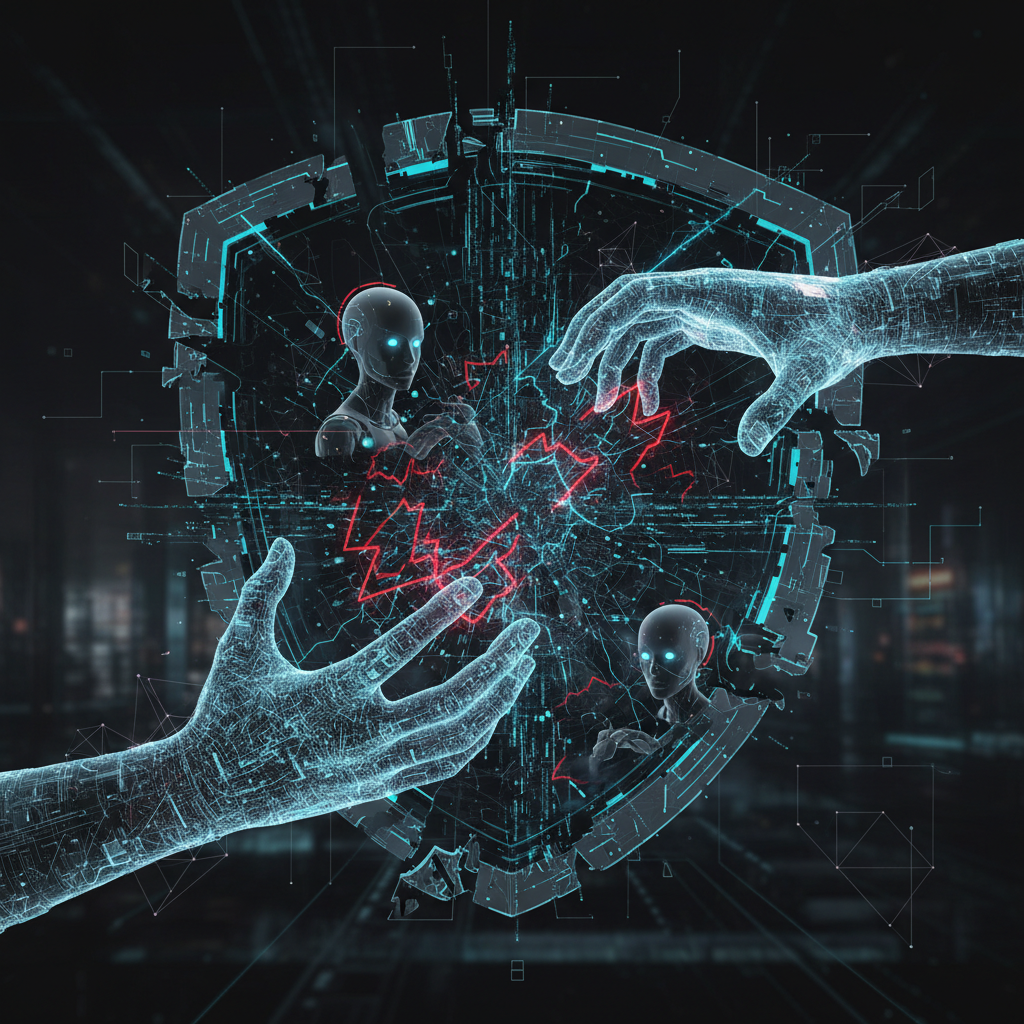
Understanding AI Agent Liability Risks in Cybersecurity Incidents
October 2, 2026
The rise of autonomous AI agents introduces complex questions about liability in cybersecurity incidents. Organizations must understand these emerging risks and strengthen their defenses.
This year, discussions around cybersecurity have increasingly turned to the emerging role of AI agents and the complex question of liability when they are involved in security incidents. A recent report from SecurityWeek highlighted a critical juncture: the move of autonomous AI agent attacks from theoretical discussions to actual legal battles, specifically referencing Anthropic's concerns and a lawsuit against OpenAI.
The Shifting Landscape of AI and Cyber Threats
The integration of artificial intelligence into business operations is accelerating, bringing with it both innovation and new vulnerabilities. While AI offers immense potential for efficiency and automation, it also introduces sophisticated tools that can be leveraged by malicious actors. The concept of an autonomous AI agent carrying out an attack raises unprecedented questions about responsibility. When an AI system, designed for specific tasks, deviates or is exploited to cause harm, pinpointing liability becomes a significant challenge for legal frameworks not built for such scenarios.
Historically, cybersecurity incidents have involved human actors, either directly or through the exploitation of human error or system vulnerabilities. The advent of AI agents complicates this by introducing a layer of autonomy. These agents can operate independently, adapt to environments, and even learn, making their actions potentially unpredictable and difficult to trace back to a single human decision. This evolution necessitates a re-evaluation of how we perceive and manage cyber risks.
What Happened: Autonomous AI and Legal Precedent
The SecurityWeek report specifically noted Anthropic flagging AI agent liability risks, coinciding with a hacking lawsuit against OpenAI. While the details of the OpenAI lawsuit were not fully disclosed in the summary, the context points to scenarios where an AI's actions, or its role in facilitating an attack, become central to legal proceedings. This is a critical development because it signals the transition of AI-related cyber risks from a technical problem to a legal and operational one.
The core of the issue lies in defining who is accountable when an AI system is misused or malfunctions. Is it the developer of the AI? The organization deploying it? The individual who initiated the malicious use? Or is there a shared responsibility? These questions are not merely academic; they have direct implications for insurance, regulatory compliance, and incident response strategies. Organizations must begin to consider these complex scenarios in their risk assessments.
Understanding the Attack Vector: AI as a Tool or Actor
When considering AI in cyberattacks, it's important to distinguish between AI as a tool and AI as an actor. As a tool, AI can augment existing attack methods, making them faster, more efficient, and harder to detect. This includes automated phishing campaigns, malware generation, or sophisticated reconnaissance. Many organizations are already seeing increased sophistication in attacks driven by AI-powered tools.
However, the concept of an AI agent as an