AI-Powered Security: Unifying Your Defenses with Open Architecture
July 11, 2026
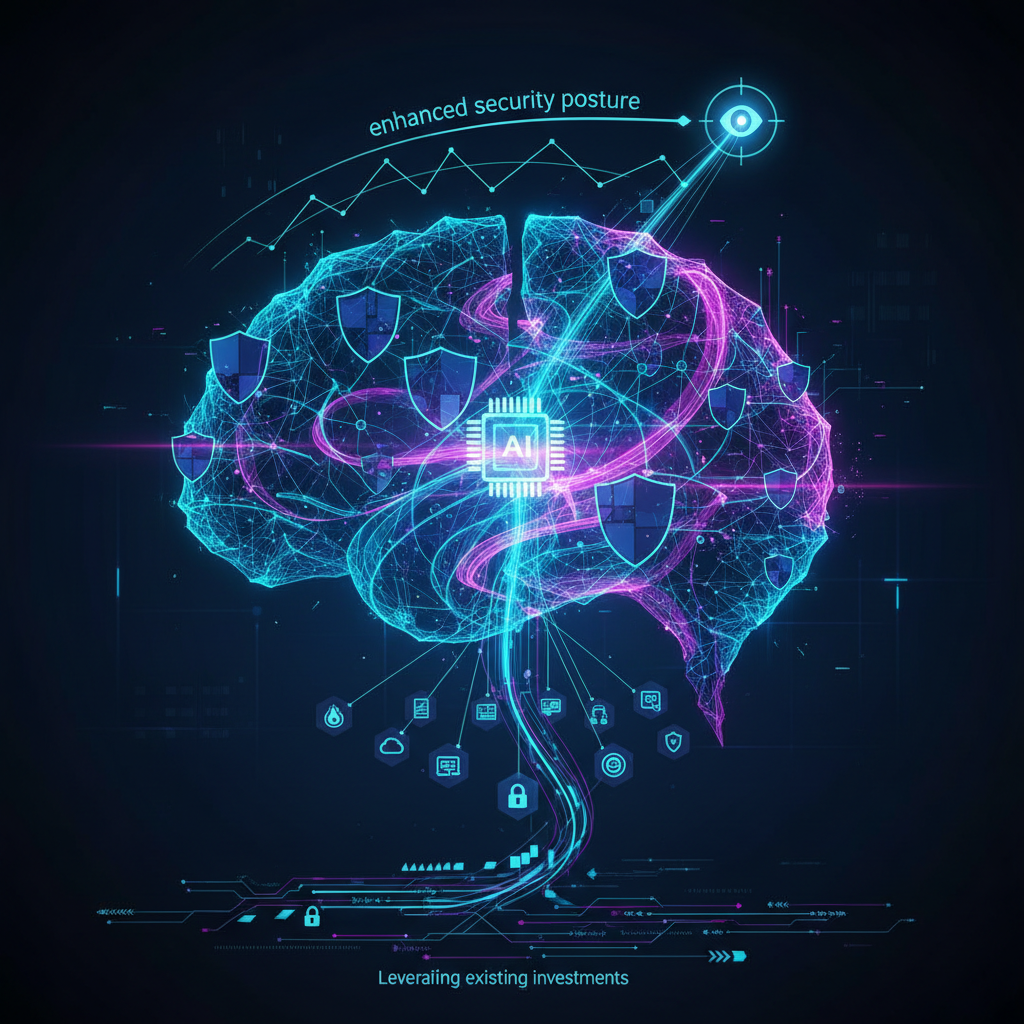
An AI-powered open architecture security platform helps organizations unify their disparate security tools and data, leading to more effective threat detection and response. This approach enhances overall security posture by leveraging existing investments.
Organizations today face a complex and evolving threat landscape. They often grapple with a patchwork of security tools that operate in silos, creating visibility gaps and slowing down critical response times. An AI-powered open architecture security platform addresses these challenges by integrating diverse security data and tools into a single, cohesive view, driven by advanced artificial intelligence.
The Challenge: Fragmented Security Paradigms
The typical enterprise security stack is a compilation of various point solutions—firewalls, intrusion detection systems, endpoint protection, and more. Each generates vast amounts of telemetry, but correlating this data across different vendors and systems is a significant hurdle. This fragmentation often leads to:
- Blind spots: Critical events can be missed when data is not correlated.
- Alert fatigue: Security teams are overwhelmed by a deluge of alerts from unconnected systems.
- Slow response: Manual correlation and investigation prolong incident response times.
- Inefficient resource use: Security analysts spend more time managing tools than actively defending against threats.
This disjointed approach not only increases risk but also drives up operational costs and burdens already stretched security teams.
Who Needs a Unified Security Approach?
Any organization struggling with a complex security environment and seeking to maximize its current security investments can benefit from an AI-powered open architecture security platform. This is particularly true for those who:
- Have invested in multiple security products from different vendors.
- Are experiencing challenges consolidating security data and alerts.
- Need to improve their threat detection and incident response capabilities.
- Aim to reduce operational overhead for their security team.
- Require more adaptive and intelligent security defenses against advanced persistent threats.
"Complexity is the enemy of security. Simplifying and unifying your security operations through an open architecture is a strategic imperative for modern defense."
Lyra's Approach to Open Architecture Security
Lyra delivers an AI-powered open architecture security platform that transforms your security operations. Our platform is vendor-neutral, designed to integrate seamlessly with your existing security tools, rather than replace them. We fuse telemetry from all your disparate systems—network, endpoint, cloud, applications—into a centralized platform. This data is then analyzed by advanced AI and machine learning algorithms to identify anomalies and potential threats that individual tools might miss.
Key components of Lyra's platform include:
- Universal data ingestion: Connects to virtually any security tool or data source.
- AI-driven analytics: Utilizes machine learning to detect subtle attack patterns and reduce false positives.
- Automated workflows: Orchestrates response actions across your security ecosystem.
- Centralized visibility: Provides a unified dashboard for all security events and alerts.
This integrative approach not only enhances threat detection but also streamlines your security workflows, allowing your team to focus on strategic defense rather than manual data correlation.
Real-World Scenarios for Enhanced Security
Consider these examples where an AI-powered open architecture significantly improves security posture:
Advanced Persistent Threat (APT) Detection
An APT often moves laterally across a network, using multiple vectors. Without a unified view, an alert from endpoint detection might be isolated from suspicious network traffic or unusual login patterns. Lyra's platform correlates these seemingly unrelated events across your endpoint and network security tools, presenting a comprehensive picture of the APT's activities. This allows for earlier and more accurate detection, enabling your team to respond proactively.
Supply Chain Attack Monitoring
Attackers increasingly target third-party vendors to gain access. An open architecture platform can integrate threat intelligence feeds with your network and application logs. If a compromised vendor's IP address attempts to access your systems, the platform can flag this immediately by correlating external threat data with internal access logs, even if your individual tools don't have direct visibility into the vendor's compromise information.
Insider Threat Identification
Insider threats are notoriously difficult to detect. An employee exhibiting unusual behavior—downloading large amounts of data, accessing systems outside their normal working hours, or attempting to bypass security controls—might trigger minor alerts across several systems. Our platform aggregates these low-fidelity signals from different sources, such as identity and access management systems, data loss prevention tools, and user behavior analytics, to build a high-fidelity alert indicating a potential insider threat.
Common Misconceptions About AI in Security
Some common misunderstandings about AI in security include:
- AI will replace human analysts: AI augments human capabilities by automating mundane tasks and highlighting critical threats, freeing analysts to focus on complex investigations and strategic planning. It is a force multiplier, not a replacement.
- AI is a silver bullet: While powerful, AI is only as good as the data it processes and the models it's trained on. An open architecture ensures AI has access to the broadest, richest dataset.
- AI is too complex for my organization: Modern AI-powered platforms are designed for usability, providing clear insights and actionable intelligence without requiring deep AI expertise from your security team.
Complementing Incident Response & Recovery
Lyra's AI-powered open architecture security platform is a foundational element that significantly strengthens our Incident Response & Recovery practice. When an incident occurs, time is of the essence. The platform provides:
- Faster detection: AI capabilities swiftly identify threats, often before they escalate.
- Richer context: Centralized data and correlated insights give our incident response team a complete view of the attack, accelerating investigation.
- Automated containment: Pre-defined playbooks and automation within the platform can initiate immediate containment actions, limiting damage.
- Proactive defense: By continuously learning from threat data, the platform helps us enhance your defenses, preventing future incidents.
This means our incident response experts can move from detection to containment and eradication with unprecedented speed and precision, minimizing downtime and business disruption. For more comprehensive solutions, explore Lyra's full range of managed security services.
How Lyra Helps
Lyra helps organizations like yours navigate the complexities of modern cybersecurity by providing a unified, intelligent defense. Our AI-powered open architecture security platform is built to integrate with your existing infrastructure, providing superior threat detection and accelerated response capabilities. We empower your team with actionable insights and automated workflows, strengthening your overall security posture.
To discover how Lyra can enhance your security operations and bolster your incident response readiness, please contact us today to schedule a consultation. Our experts are ready to help you build a more resilient and secure environment.