Modernizing Remote Access: Secure On-Premises Applications with Azure Application Proxy
November 1, 2026
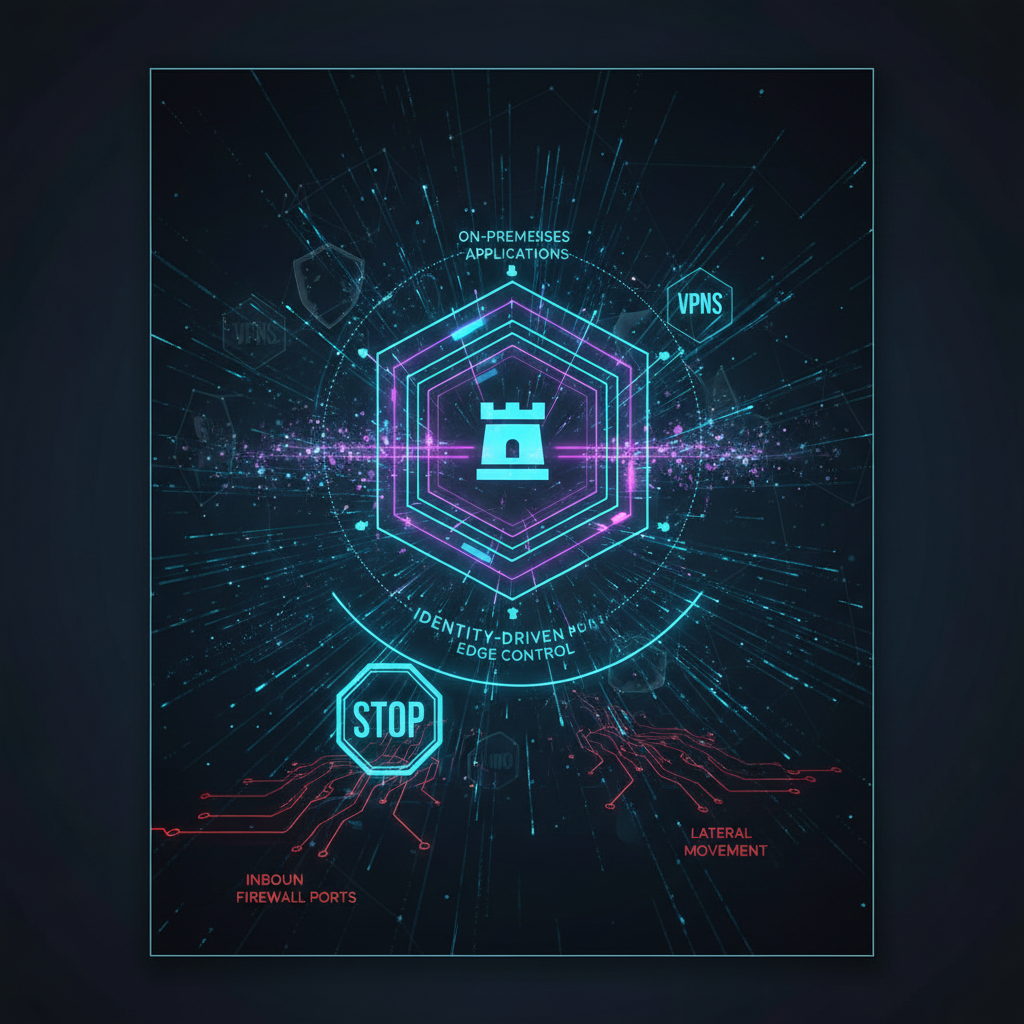
Publish internal on-premises apps securely without VPNs. Discover how Azure Application Proxy uses identity-driven edge controls to eliminate inbound firewall ports and stop lateral movement.
Deploying Azure Application Proxy allows organizations to publish internal, on-premises web applications to remote users without maintaining cumbersome virtual private networks or exposing inbound firewall ports. For years, granting remote workers access to legacy enterprise software required tunneling directly into the core network—a practice that drastically expands your attack surface. By shifting this access pattern to modern identity-driven edge publishing, businesses can enforce Zero Trust access controls without refactoring their legacy internal tools.
Legacy perimeter architectures were built for an era when users worked strictly behind corporate firewalls. Today, hybrid work demands rapid, secure access to line-of-business software, internal portals, and reporting engines without granting users broad visibility over entire subnets.
The Flaws of Legacy Remote Access and VPNs
Traditional remote access patterns rely heavily on client-based VPNs and demilitarized zones (DMZs) protected by reverse proxies. While functional, these patterns introduce significant architectural and operational vulnerabilities that modern attackers routinely exploit.
When an employee connects via a traditional VPN, they obtain network-level access to the internal environment. If a remote worker's endpoint becomes infected or their credentials fall into the wrong hands, threat actors can move laterally across the entire subnet.
Furthermore, exposing reverse proxies in a DMZ requires opening inbound firewall ports (such as 80 and 443) directly to the public internet. This places the burden of unpatched web server vulnerabilities, public certificate maintenance, and DDoS mitigation entirely on your internal infrastructure team.
In a Zero Trust architecture, network connectivity should never imply application trust. Access must be granted per application, evaluated dynamically, and verified at the identity layer.
How Azure Application Proxy Changes the Perimeter
Azure Application Proxy fundamentally shifts how remote users interact with internal infrastructure. Instead of accepting inbound network connections, a lightweight connector service installed inside your corporate network establishes outbound-only connections to the cloud control plane.
[Remote User]
      │
      ▼ (HTTPS)
[Microsoft Cloud Edge] ── (Conditional Access / MFA / Device Compliance)
      │
      │ (Outbound-only reverse connection)
      ▼
[Private Network Connector]
      │
      ▼ (Internal HTTP/HTTPS/Kerberos)
[Legacy On-Premises Application]
When an external user requests access to an internal application, several distinct steps take place:
- Identity Pre-Authentication: The user hits an external URL managed at the cloud edge, where identity, device compliance, and risk signals are evaluated before any request reaches the corporate network.
- Contextual Evaluation: Strict policies determine whether the request satisfies requirements such as multifactor authentication (MFA) or trusted device compliance.
- Outbound Retrieval: The internal connector pulls the authenticated request over an established outbound TLS connection and queries the application locally.
- Seamless Return: The internal application responds to the connector, which routes the data back through the cloud proxy to the validated user.
By eliminating inbound firewall rules, your on-premises servers remain entirely invisible to external port scanners and automated exploit kits. Organizations bridging legacy data centers with the cloud can integrate this pattern seamlessly into their broader azure hybrid infrastructure roadmap.
Who Needs Modern Application Publishing?
Organizations operating hybrid environments rarely have the luxury of rewriting or migrating decades-old software stacks overnight. Identity-driven edge publishing is specifically designed for teams balancing modern security standards with legacy infrastructure dependencies.
This approach is particularly valuable for:
- Enterprises Managing Critical Web Apps: Internal inventory systems, legacy ERP platforms, intranet portals, and reporting dashboards that lack native SAML or modern authentication support.
- Organizations with Third-Party Contractors: Providing external vendors access to a single internal utility without provisioning dedicated corporate laptops, VPN clients, or domain network access.
- Regulated Industries: Entities operating under frameworks like HIPAA, PCI DSS, or NIST that require strict network segmentation and continuous authentication for remote sessions. You can align these controls directly with your broader compliance objectives.
- Security Teams Reducing Lateral Movement Risk: IT leaders actively replacing broad network tunnels with least-privilege, application-specific boundary controls.
Real-World Use Cases: Beyond Basic Web Applications
Modern edge publishing accommodates diverse authentication and operational protocols, enabling seamless modernization across common enterprise scenarios:
Kerberos Constrained Delegation (KCD) and SSO
Many internal applications authenticate users using Windows Integrated Authentication (IWA) and Kerberos. When remote users authenticate to the cloud edge via modern identity standards, the internal connector can perform Kerberos Constrained Delegation on their behalf. Users log in once using modern MFA and receive seamless single sign-on (SSO) directly to legacy Windows-authenticated applications.
Secure Remote Desktop and Specialty Endpoints
Beyond browser-based web tools, organizations frequently use application proxy connectors to front-end Remote Desktop Gateway (RDG) deployments or specialized terminal access. Coupled with modern endpoint hardening from application storage network controls, you isolate the underlying hosts while retaining operational continuity.
Common Misconceptions About Application Publishing
Migrating away from traditional VPNs often surfaces misunderstandings regarding performance, protocol support, and architectural limits:
- "It slows down application performance." Because traffic routes through a global cloud edge, organizations often expect substantial latency. In practice, users experience performance comparable to or faster than bloated VPN tunnels, as traffic avoids congested centralized concentrators and leverages high-speed backbone routing.
- "It requires completely public-facing applications." The destination app remains strictly private. It never receives a public IP address, and no inbound traffic is permitted on the local network firewall.
- "Every app must be re-architected." Modern edge publishing is intentionally non-invasive. The connector translates cloud-based modern tokens into local headers, basic auth, or Kerberos tickets without modifying the source code.
Fortifying Incident Response and Blast Radius Containment
From an incident response perspective, traditional VPNs present a worst-case blast radius. When compromised credentials grant an adversary network-level VPN access, responders must trace lateral traversal across internal endpoints, subnets, and Active Directory domains.
Publishing through modern application proxies fundamentally limits an adversary's footprint:
- Elimination of Lateral Movement: Compromising an application-specific session limits an intruder solely to that specific web service. They cannot run port sweeps, pivot via SMB, or discover neighbor database clusters.
- Granular Session Revocation: Security analysts can immediately terminate a suspicious user's cloud session, revoke tokens, and block device access centrally without having to kick an entire site off the network.
- Centralized Telemetry: All authentication requests, policy violations, and suspicious sign-in anomalies are captured at the identity provider tier. This structured telemetry integrates directly with your siem ids monitoring pipelines for immediate investigation.
Replacing untethered network tunnels with per-application controls substantially restricts attacker mobility, turning potential enterprise-wide breaches into localized containment events.
How Lyra Helps
Implementing identity-driven application publishing requires careful alignment between internal networking, Active Directory identity, and modern cloud security baselines. Lyra’s certified architects design and implement production-ready application edge environments that eliminate perimeter vulnerabilities while preserving user productivity.
Through our dedicated azure application proxy service, Lyra handles every layer of your access transition:
- Architecture and Connector Sizing: Planning redundant, high-availability connector groups engineered for low-latency throughput and disaster recovery.
- Conditional Access Hardening: Building granular access policies that enforce MFA, device health checks, and risk-based contextual controls before requests touch your environment.
- Legacy Protocol Translation: Configuring Kerberos Constrained Delegation, header-based translation, and custom domain certificate infrastructure for zero-friction single sign-on.
- Unified Security Operations: Integrating proxy access telemetry into your continuous detection workflows and incident containment runbooks.
Ready to retire legacy VPN concentrators and secure your internal web applications behind a resilient Zero Trust edge? Contact Lyra today to speak with our infrastructure security engineers.