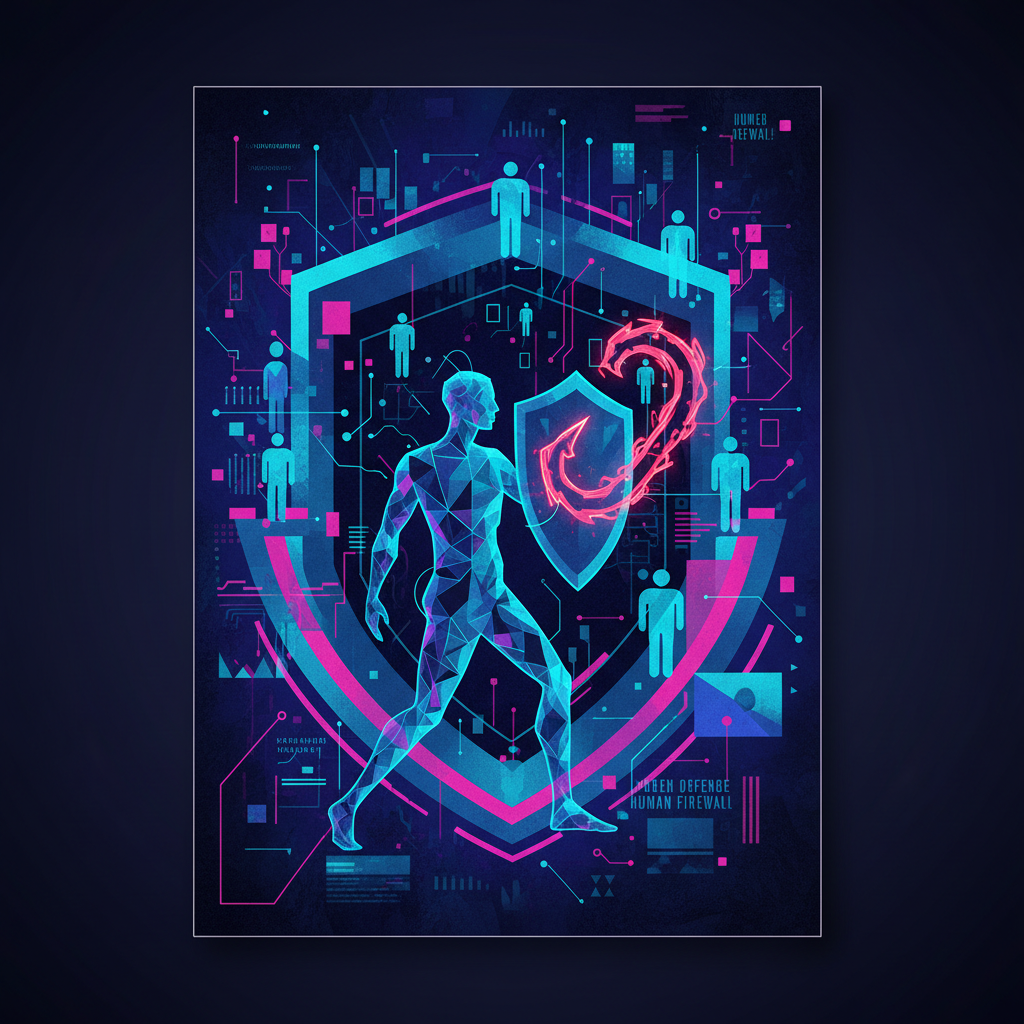
Cybersecurity Awareness and Phishing Training: Empower Your Workforce
October 14, 2026
Cybersecurity awareness and phishing training transforms your employees into a vital defense layer against cyber threats. Learn how strategic training programs mitigate risks and enhance your organization's overall security posture.
Your employees are often considered the weakest link in your cybersecurity defenses, but with the right cybersecurity awareness and phishing training, they can become your strongest asset. In today's evolving threat landscape, technical controls alone are insufficient to protect organizations from sophisticated cyberattacks. A well-informed workforce, capable of identifying and reporting threats, is crucial for maintaining a robust security posture.
The Problem: Human Error as an Entry Point
Many successful cyberattacks, including ransomware and data breaches, begin with human interaction. Phishing emails, malicious links, and social engineering tactics exploit human trust, curiosity, or urgency. Even with advanced firewalls and endpoint protection, a single click by an unaware employee can compromise an entire network. This vulnerability isn't due to malice but often a lack of understanding or inadequate training on identifying current threats.
Attackers constantly refine their methods, making it challenging for individuals to discern legitimate communications from deceptive ones. Without continuous education, employees struggle to recognize the subtle cues of a phishing attempt or understand the implications of sharing sensitive information. This gap in knowledge can lead to significant financial losses, reputational damage, and operational disruptions.
"No matter how much you invest in technology, people remain the critical variable in cybersecurity. Empowering them with knowledge is non-negotiable."
Who Needs Cybersecurity Awareness and Phishing Training?
Simply put, every organization with employees and digital assets needs effective cybersecurity awareness and phishing training. This isn't limited to tech-heavy industries; even small businesses or non-profits handling basic customer data are targets. Consider the following scenarios:
- Organizations with sensitive data: Healthcare providers, financial institutions, and legal firms are prime targets due to the value of their data. Employees in these sectors must be hyper-aware of data handling protocols and phishing risks.
- Businesses subject to compliance: Companies adhering to frameworks like HIPAA, PCI DSS, or GDPR have mandates for employee training. Regular, documented training is essential not just for security but also for regulatory adherence. Learn more about how Lyra helps with compliance and regulatory frameworks at our compliance posture.
- Companies with remote or hybrid workforces: Distributed teams often rely heavily on email and cloud-based collaboration tools, increasing their exposure to online threats. Training ensures consistent security practices across all work environments.
- Any business facing phishing or social engineering attempts: If your organization regularly receives suspicious emails or notices unusual login attempts, your employees are already being targeted. Proactive training is vital.
How Lyra Delivers Effective Training
Lyra's approach to cybersecurity awareness and phishing training is designed to foster measurable behavior change, turning your workforce into a strong first line of defense. We move beyond generic, one-size-fits-all modules to deliver targeted, impactful education through our comprehensive Cybersecurity Awareness and Phishing Training program.
Our methodology includes:
- Role-Based Training: We understand that not all employees face the same threats or require the same level of technical detail. Training is customized based on an employee's role, access levels, and the types of data they handle. A finance department might focus on invoice fraud, while IT staff might receive training on advanced persistent threats.
- Simulated Phishing Campaigns: Regular, realistic simulated phishing exercises are critical for practical application. These campaigns test employees' ability to identify and report suspicious emails in a safe environment. We track individual and organizational performance, identifying areas for improvement without judgment.
- Actionable Reporting and Analytics: Our programs provide detailed reports on training completion rates, phishing simulation performance, and behavioral trends over time. This data allows organizations to demonstrate improvement, identify persistent vulnerabilities, and refine future training efforts. This measurable progress is key to proving ROI and enhancing overall security.
- Continuous Learning: Cybersecurity threats evolve daily. Our training modules are updated regularly to reflect the latest attack vectors and social engineering techniques, ensuring your team is always equipped with current knowledge.
Real-World Scenarios Where Training Prevents Breaches
Consider these common scenarios where effective cybersecurity awareness training can make the difference between a near-miss and a costly incident:
- The Urgent Invoice Scam: An employee receives an urgent email, seemingly from a vendor, requesting immediate payment to a new bank account. A trained employee would recognize red flags like mismatched sender addresses or unusual urgency and verify the request through an established, out-of-band channel before acting.
- The HR Phishing Email: A human resources staff member receives an email appearing to be from an executive, asking for a list of employee W2s. Awareness training teaches them to spot such social engineering tactics, never to send sensitive data via email, and to report the suspicious request immediately.
- The Malicious Link: An employee clicks a link in a seemingly legitimate email, leading to a fake login page designed to steal credentials. Training emphasizes scrutinizing URLs, using multi-factor authentication, and understanding the dangers of credential harvesting.
Common Misconceptions About Employee Training
Many organizations hold misconceptions that hinder their cybersecurity training efforts:
- "Our antivirus software handles everything." While essential, technical tools are not foolproof. They can't prevent every human error, nor can they detect every zero-day phishing attempt. People are the last line of defense.
- "One-and-done annual training is enough." Cybersecurity is an ongoing battle. Annual training provides a baseline, but continuous reinforcement through regular updates, micro-learnings, and simulated phishing is necessary to keep skills sharp and knowledge current.
- "Employees should just know better." This dismissive attitude ignores the sophistication of modern attacks. Expecting employees to instinctively recognize complex cyber threats without proper education is unrealistic and sets them up for failure. Providing them with the right tools and knowledge is critical.
How Training Complements Incident Response & Recovery
Effective cybersecurity awareness and phishing training doesn't just prevent incidents; it also significantly strengthens your incident response and recovery capabilities. When an incident inevitably occurs, a well-trained workforce contributes in several ways:
- Faster Detection: Trained employees are more likely to identify and report suspicious activity quickly, often before automated systems. This early warning drastically reduces the "dwell time" of an attacker in your network.
- Reduced Impact: Employees who understand basic security protocols are less likely to exacerbate an attack. For example, knowing not to click on further malicious links or disconnect an infected machine can contain the spread.
- Improved Recovery: A security-aware culture means employees are more cooperative during investigations and recovery efforts. They understand the importance of following procedures, such as changing passwords promptly or reporting unusual system behavior.
Lyra specializes in comprehensive incident response and recovery, and we view employee training as an integral, proactive component of that readiness. While our core incident response and recovery services are designed to manage and mitigate active breaches, the goal is always to minimize the frequency and severity of such events. Empowering your team through training is a critical step in achieving that goal.
How Lyra Helps
At Lyra, we understand that robust cybersecurity is a layered defense. Our Cybersecurity Awareness and Phishing Training program is meticulously designed to transform your greatest vulnerability into your strongest asset. By combining role-based education, realistic simulations, and detailed reporting, we build a security-conscious culture that actively protects your organization. This proactive approach complements our full suite of cybersecurity services, ensuring a holistic defense strategy. To discover how Lyra can empower your workforce and harden your defenses, get in touch with us today.
Contact Lyra to discuss your organization's cybersecurity awareness needs and fortify your human firewall: Contact Lyra.