Linux Capability Expansion: Safely Introducing Linux Workloads to Windows-Centric Teams
November 9, 2026
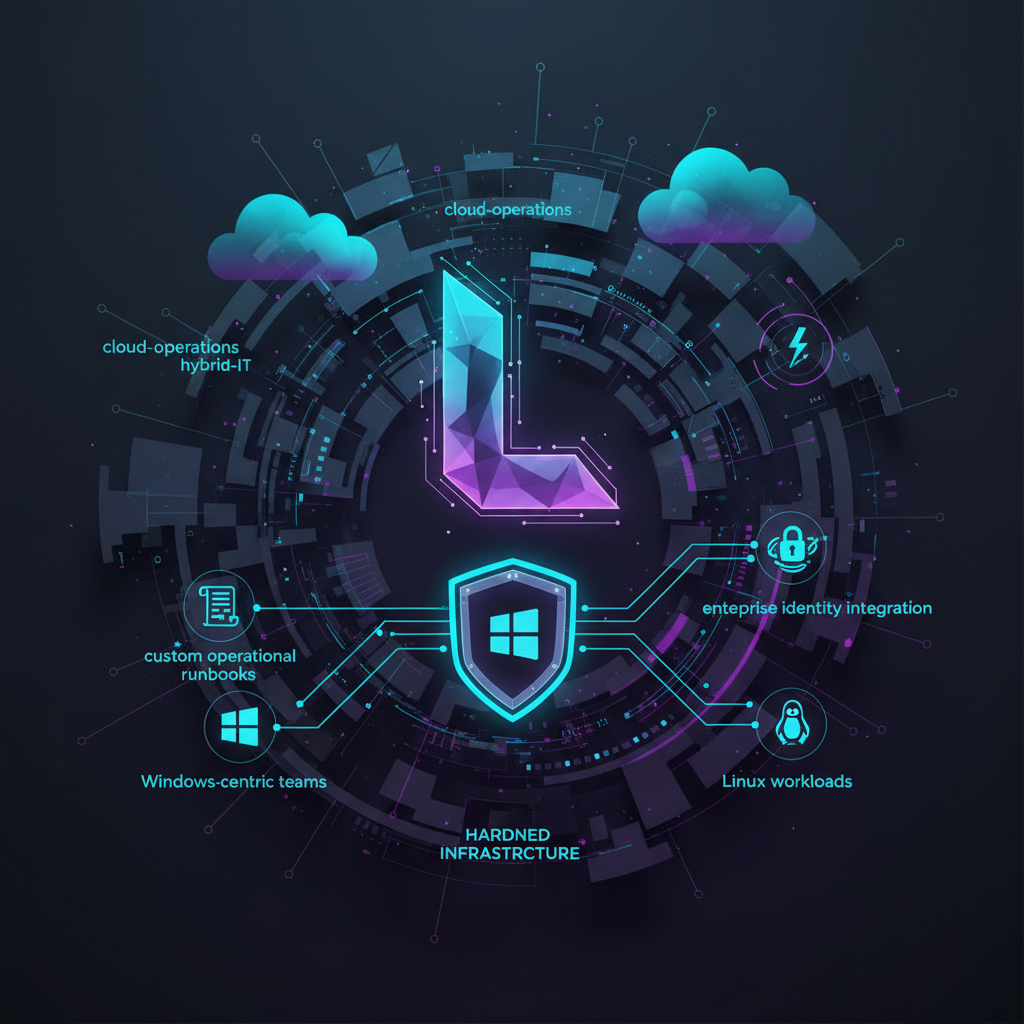
Safely expand Windows-centric teams into production Linux workloads. Lyra delivers hardened infrastructure, custom operational runbooks, and enterprise identity integration.
Adopting Linux workloads is often an operational necessity, but for teams built exclusively on Windows Server and Active Directory, that transition can quickly introduce security blind spots and engineering bottlenecks. While business applications, containerization engines, modern databases, and machine learning pipelines increasingly demand enterprise Linux distributions, managing them requires an entirely different operational discipline. Without experienced personnel, organizations risk misconfigurations, unpatched kernel vulnerabilities, and disjointed identity structures.
Bridging this gap requires specialized expertise that unites your existing infrastructure with modern, open-source server administration. That is where targeted Linux capability expansion transforms an ad-hoc experiment into a resilient, production-ready operational tier.
The Problem: The Hidden Debt of the Accidental Linux Footprint
Most mid-market and enterprise IT shops did not set out to become multi-operating-system enterprises overnight. Instead, Linux often sneaks into Windows-centric environments via shadow deployments or specific software mandates:
- A vendor delivers an appliance that runs on an embedded Ubuntu or Rocky Linux distribution.
- Data engineering teams deploy specialized analytical clusters or open-source tooling.
- Developers spin up containerized microservices hosted on unhardened distributions across public cloud platforms.
When system administrators accustomed to Group Policy, PowerShell, and NTFS permissions inherit these endpoints, friction is inevitable. Basic administration is often handled via default configurations found online, SSH keys are circulated without auditing, and logging fails to route into existing centralized monitors.
Treating an enterprise Linux server like a Windows machine without a graphical interface is a recipe for undetected intrusion, configuration drift, and catastrophic operational downtime.
The resulting fragmentation undermines your broader security posture. Systems run with neglected package updates, unmanaged root access flourishes, and backup procedures skip over critical Unix filesystem mounts.
Who Needs Dedicated Linux Capability Expansion?
This service is engineered specifically for organizations that have achieved mature operational workflows in Windows environments but must now support Linux at enterprise scale. Common profiles include:
1. Modernizing Engineering and Product Teams
Organizations migrating legacy monolithic applications to containerized runtimes or cloud-native infrastructure typically run these services on Linux. While software developers understand application dependencies, they should not be burdened with underlying OS hardening, disk partitioning, or kernel tuning.
2. Cloud-Migrating Enterprises
Whether refactoring infrastructure via AWS cloud migration and development or scaling modern services through Azure IaaS and PaaS cloud migrations, cloud workloads disproportionately leverage Linux. Teams must operate these instances with the same rigor they apply to on-premises domain controllers.
3. Compliance-Bound Institutions
Financial institutions, healthcare providers, and federal contractors subject to stringent audits cannot leave Linux systems undocumented. Regulators expect strict compliance with CIS benchmarks, controlled privileged access, and immutable logging across every operating system on the network.
How Lyra Delivers Production-Ready Linux Operations
Lyra provides hands-on engineering, ongoing operational administration, and rigorous documentation designed to integrate cleanly into your current operating model. We do not just build systems and walk away; we establish an operational baseline your internal staff can understand and sustain.
+--------------------------------------------------------------------------+
|                     LYRA LINUX ADOPTION LIFECYCLE                        |
+--------------------+--------------------+-------------------------------+
|  1. DISCOVERY      |  2. HARDENING      |  3. INTEGRATION               |
|  * Asset mapping   |  * CIS Benchmarks  |  * Active Directory / PAM     |
|  * SSH key audit   |  * Kernel tuning   |  * Centralized SIEM logging   |
|  * Risk profiling  |  * SELinux config  |  * EDR agent telemetry        |
+--------------------+--------------------+-------------------------------+
                                     |
                                     v
+--------------------------------------------------------------------------+
|  4. OPERATIONALIZATION & RUNBOOKS                                        |
|  * Automated patching pipelines (Ansible/Terraform)                      |
|  * Plain-English disaster recovery runbooks                              |
|  * Joint incident response runbook synchronization                       |
+--------------------------------------------------------------------------+
Our deployment lifecycle addresses four core operational tiers:
Infrastructure Architecture and Hardening
We evaluate workload requirements to select appropriate enterprise distributions, configure secure partitioning schemes, and apply baseline security controls aligned with CIS benchmarks. Core controls like SELinux or AppArmor are configured intentionally rather than disabled to eliminate warning prompts.
Identity, Privilege, and Access Integration
To prevent disconnected identity silos, we bridge your Linux fleet directly to enterprise identity providers. Utilizing modern privileged access management standards, we eliminate shared root accounts, enforce time-bound sudo privileges, and replace unmanaged SSH keys with centralized, certificate-backed authentication.
Operational Runbooks and Automation
We codify repetitive administration tasks using configuration management platforms like Ansible. Crucially, we deliver clear, plain-English runbooks covering deployment, routine maintenance, certificate rotation, and emergency recovery, empowering your primary administrators with actionable procedures.
Telemetry and Security Ingestion
Every Linux host must report to your broader monitoring ecosystem. We validate that security agents, system metrics, and audit daemons (auditd) feed directly into centralized security dashboards, providing continuous visibility alongside Windows assets.
Real-World Scenarios: From Fragmented Deployments to Hardened Stability
Seeing how these challenges emerge in day-to-day operations underscores the value of structured capability expansion:
Scenario A: The High-Throughput E-Commerce Database
A regional retailer ran its core enterprise resource planning system on Windows Server, but selected a specialized Linux-based database for a new omnichannel platform. Lacking dedicated Unix talent, internal staff deployed the instance with default sysctl parameters, leading to periodic memory exhaustion and sudden database crashes under peak loads.
Lyra rebuilt the deployment framework, implemented production-grade swap profiles, optimized kernel-level I/O schedulers, and integrated automated disk snapshotting. Downtime dropped to zero, and the internal operations team received exact playbooks for future node provisioning.
Scenario B: Securing Third-Party Vendor Appliances
A healthcare provider received a proprietary diagnostic system shipped as a black-box Linux virtual appliance. Because it existed outside Active Directory, it went unpatched for two years and retained default administrative credentials.
Lyra audited the system, restricted access via network boundary controls, segregated the underlying daemon accounts, and integrated the machine’s local audit logs into the organization's wider incident detection systems—maintaining vendor functionality while fulfilling strict regulatory standards.
Common Misconceptions About Operating Linux Alongside Windows
Navigating multi-OS infrastructure requires dismantling several common organizational myths:
- "Linux does not get attacked as frequently as Windows." While Windows historically dominated desktop and enterprise workstation targeting, Linux powers the overwhelming majority of public cloud workloads and internet-facing servers. Adversaries actively target exposed SSH interfaces, misconfigured containers, and unpatched web frameworks on Linux.
- "Our Windows team can simply search the web for terminal commands as issues arise." Copying command-line snippets into a production shell without understanding Unix permissions, signal handling, or package dependencies frequently leads to accidental file-system corruption or security exposures.
- "We have to replace Active Directory to manage Linux access." Modern enterprise identity frameworks allow Linux hosts to integrate with Active Directory or cloud identity providers via standard protocols, preserving single sign-on and role-based access controls across your whole enterprise.
How Linux Expansion Complements Incident Response and Recovery
Incident response readiness is not just about having a playbook; it is about knowing your environment before an adversary exploits it. When an organization treats Linux hosts as secondary or unmanaged endpoints, those machines frequently become initial access footholds or unmonitored command-and-control relays during an attack.
At Lyra, our flagship discipline is Incident Response & Recovery. We bring that exact investigative perspective to enterprise infrastructure design. When we engineer Linux capabilities for your team, we do so through the lens of containment, forensics, and operational resilience:
- Forensic Readiness: We configure detailed logging structures (
auditd, systemd journal persistence, centralized forwarding) so that investigators have immutable evidence if a security event occurs. - Blast Radius Reduction: By implementing strict privilege separation and network segmentation, we ensure a compromised container or web host cannot traverse into your core Windows domain.
- Rapid, Verifiable Recovery: When disaster strikes, recovery speed depends on clear code and accurate runbooks. Our automation pipelines allow you to redeploy hardened, sanitized Linux environments from bare metal or cloud images within minutes.
When systems are uniform, documented, and actively monitored, incident response teams can isolate threats immediately rather than spending precious initial hours discovering undocumented root passwords.
How Lyra Helps
Expanding your infrastructure should accelerate your business, not introduce operational gridlock or security risks. Lyra's Linux capability expansion service equips your business with production-ready Linux engineering, architectural hardening, and practical operational runbooks that bridge the gap with your existing Windows team. Whether you are deploying your first cloud-native application cluster or seeking to standardize a fragmented fleet of legacy servers, our senior engineers deliver the operational rigor your environment requires.
Ready to safely integrate enterprise Linux into your technology roadmap? Contact Lyra today to discuss your infrastructure goals with our engineering and incident response specialists.