Digital Transformation Initiatives: How to Modernize Enterprise IT Programs That Actually Ship
November 11, 2026
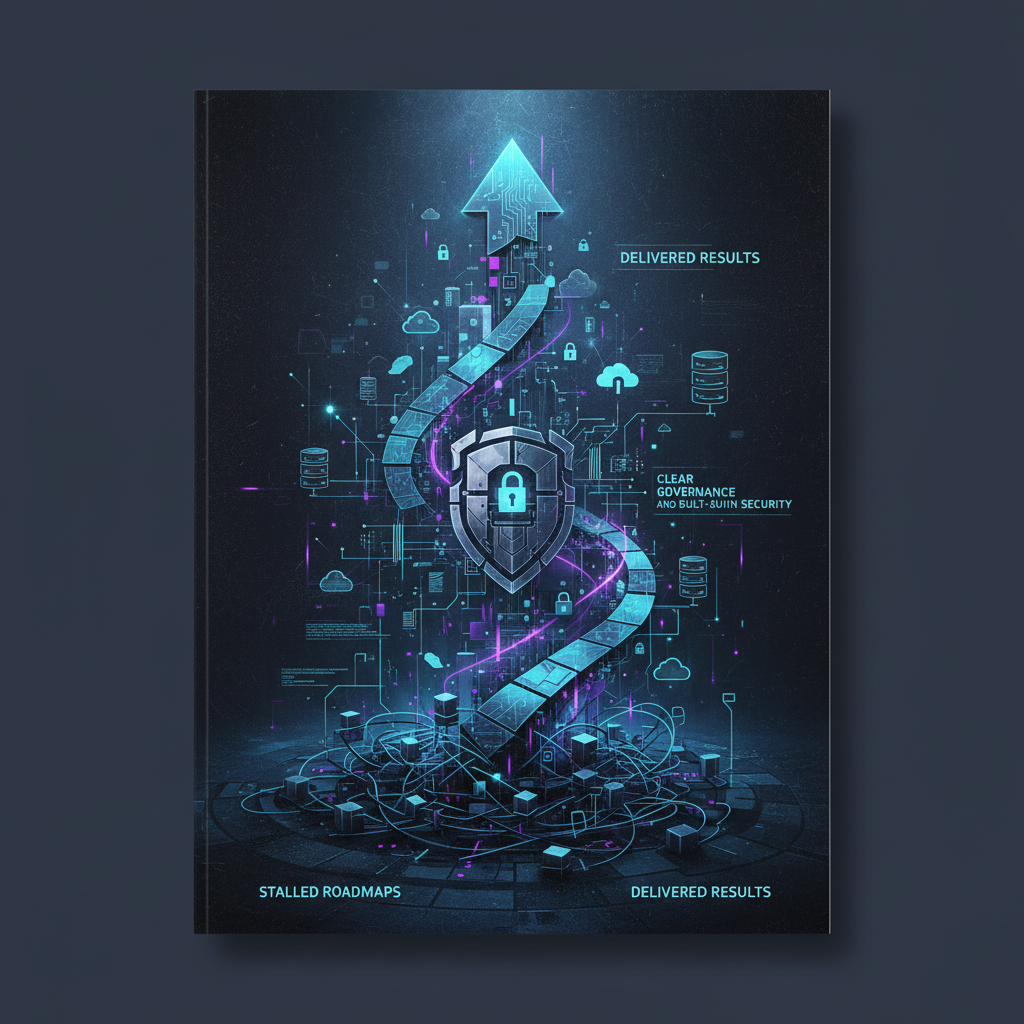
Turn stalled IT roadmaps into delivered results. Discover how Lyra executes structured digital transformation initiatives with clear governance and built-in security.
Executing successful digital transformation initiatives has become one of the most critical objectives for modern leadership teams. Yet, across mid-market and enterprise organizations, multi-year technology roadmaps frequently stall before delivering measurable business value. Modernization should not mean perpetual consulting engagements; it requires disciplined engineering, realistic governance, and a security-first foundation that protects your bottom line.
When enterprise modernization projects fail, they rarely fail because of the code or the cloud infrastructure. They stall because organizations treat transformation as an open-ended purchasing exercise rather than an operational discipline designed to deliver tangible business outcomes.
The Transformation Trap: Why Modernization Roadmaps Stall
Most digital modernization projects begin with genuine executive enthusiasm. A steering committee approves an ambitious plan to replace aging enterprise resource planning (ERP) systems, modernize infrastructure, and transition core workflows to hybrid cloud architectures. Within eighteen months, however, progress grinds to a halt under the weight of runaway scope, vendor sprawl, and employee pushback.
Several core operational breakdowns typically cause these initiatives to stumble:
- Abstract Scoping Without Milestones: Projects take on too many interconnected dependencies at once, preventing early, functional wins.
- Decoupled Security Governance: Engineering teams build new workflows without embedding security controls early, leading to compliance violations or audit failures right before launch.
- Ignoring User Adoption: Systems are designed for hypothetical workflows rather than how frontline staff, dispatchers, or financial analysts actually operate day to day.
- Unmanaged Technical Debt: Teams attempt to migrate legacy software stacks into cloud environments without addressing underlying architecture flaws, resulting in cloud cost inflation and latency issues.
Real transformation happens in operational increments. If an initiative cannot ship a functional capability within ninety days, its scope is too broad or its governance has broken down.
Who Needs Structured Digital Transformation Initiatives?
Not every technology refresh qualifies as a transformation. A structured engagement becomes essential when technical bottlenecks actively constrain revenue growth, prevent corporate transactions, or introduce systemic operational vulnerabilities.
Organizations that benefit most from formal modernization governance typically share common traits:
- High-Growth Mid-Market Firms Outgrowing Legacy Systems: Companies scaling past $50M in annual revenue whose manual operational workflows, on-premises file servers, and fragmented communications no longer support cross-regional expansion.
- Private Equity Portfolio Companies Undergoing Value Creation: Acquired entities tasked with carving out operational systems, standardizing IT infrastructure, and achieving enterprise-ready margins within tight investment horizons.
- Regulated Entities Facing Modern Compliance Pressures: Healthcare providers, financial services institutions, and defense industrial suppliers governed by stringent frameworks like HIPAA, SOC 2, or CMMC that legacy architectures cannot satisfy without complex, manual compensating controls.
In these environments, upgrading isolated components in an ad-hoc fashion creates unmanageable dependencies. Teams need a comprehensive, phased blueprint that ties technology investments directly to measurable Key Performance Indicators (KPIs).
How Lyra Delivers Modernization Programs That Actually Ship
Lyra delivers digital transformation initiatives through an engineering-led framework focused on clear scope, decisive governance, and rigorous adoption metrics. Rather than delivering hundreds of pages of unexecutable advisory slide decks, our architects embed directly alongside your operational leaders to design, build, and operationalize modernized systems.
1. Discovery and Dependency Mapping
We start by assessing existing systems, data flows, and team interactions. This discovery phase evaluates current infrastructure capabilities, licensing costs, and compliance obligations, establishing a baseline against recognized benchmarks like CIS and NIST cybersecurity framework assessments.
2. Phased Architectural Sprints
Long-horizon projects are dismantled into distinct 60-to-90-day deployment cycles. Whether an initiative involves consolidating on-premises workloads via Azure hybrid infrastructure or modernizing data pipelines, each sprint delivers a production-ready milestone that users can test and adopt immediately.
3. Built-In Security and Compliance Controls
Modernization must never expand an organization's attack surface. We integrate enterprise safeguards from the architecture phase, implementing strict privileged access management policies and identity safeguards that ensure transformed applications arrive audit-ready and resilient to compromise.
4. Measurable Adoption Tracking
A platform is only as valuable as its active utilization. We measure project success using objective operational metrics: reduction in manual ticket handling, faster customer onboarding cycles, lower compute overhead, and sustained end-user adoption rates across departments.
Real-World Scenarios: Transformation in Action
Understanding how transformation functions in practice helps leadership teams distinguish between academic consulting and practical engineering delivery.
Scenario A: The Regional Healthcare Provider
A multi-site healthcare network relied on disconnected on-premises electronic records and fragmented scheduling databases. System outages caused administrative delays and hindered patient care coordination.
By restructuring the engagement into four prioritized phases, Lyra modernized identity systems, centralized data access across clinics, and enforced strict audit logging aligned with federal compliance and regulatory frameworks. Administrative record-processing times dropped by 42%, while clinical teams gained unified, secure access across all facilities without compromising patient privacy.
Scenario B: The Logistics Firm Overhauling Dispatch
A distribution company operating across three states experienced recurring delivery exceptions due to paper-based dispatching and brittle, custom-coded legacy software.
Rather than attempting an unstable "rip-and-replace" overhaul of their core database, the team isolated transaction layers, built cloud-native dispatch microservices, and rolled out modernized mobile endpoints. The business eliminated daily batch delays and improved fleet on-time performance within four months of initial deployment.
Common Misconceptions About Enterprise Transformation
Misconceptions about modernization often cause executive sponsors to hesitate or commit to flawed operational strategies.
- Misconception 1: "Digital transformation means migrating everything to the public cloud." Moving inefficient applications into public cloud infrastructure simply creates expensive, inefficient cloud applications. Strategic transformation selects the right operational substrate for each workload—whether that involves public cloud, specialized hosting, or hardened local nodes.
- Misconception 2: "Transformation is exclusively an IT department responsibility." When IT operates in isolation from business units, the resulting platforms rarely meet user needs. Successful modernization requires direct sponsorship from executive leadership and continuous feedback loops with the frontline staff operating the tools.
- Misconception 3: "Modernization always introduces major business disruption." By utilizing canary deployments, side-by-side verification environments, and phased rollouts, complex infrastructure transitions can execute seamlessly without halting daily business transactions or customer-facing operations.
How Transformation Strengthens Incident Response and Recovery
At Lyra, our flagship discipline is Incident Response & Recovery. Decades of responding to complex enterprise breaches and operational downtime events inform every strategic advisory engagement we lead.
Legacy architectures represent an acute operational risk. Outdated operating systems, unsegmented flat networks, and undocumented data stores provide hostile actors with ideal conditions for undetected lateral movement and ransomware deployment. When organizations undergo deliberate modernization, they replace these architectural blind spots with zero-trust networking, centralized telemetry, and automated baseline recovery environments.
Building clean architecture upfront directly reduces the blast radius of potential security incidents and ensures rapid, dependable restoration if an event occurs.
How Lyra Helps
A successful technology strategy requires balancing near-term operational realities with scalable infrastructure design. Lyra’s digital transformation initiatives bridge this divide, pairing senior enterprise architects with dedicated project governance to ensure your technical modernization investments hit production on schedule.
Whether your organization needs to consolidate legacy technical debt, establish compliant infrastructure, or unify distributed team operations, we provide the architectural leadership and hands-on execution needed to build resilient environments.
Ready to launch modernization projects that deliver verifiable operational gains? Contact Lyra today to speak with an enterprise strategist about your technology roadmap.