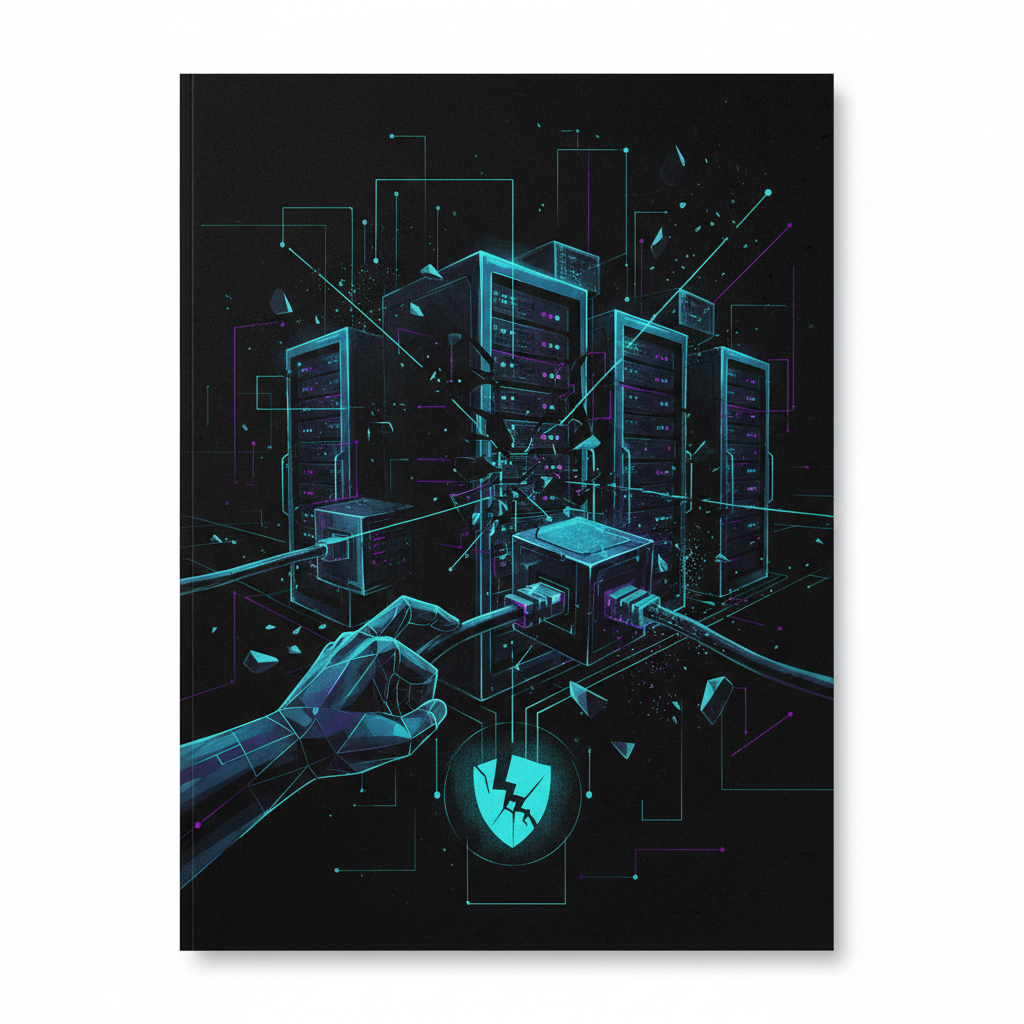
Servers Seized: Understanding the Impact of Malicious Hosting Providers on Cybersecurity
May 24, 2026
In a significant law enforcement action, Dutch authorities recently seized 800 servers from a hosting firm implicated in enabling cyberattacks. This incident underscores the critical role that hosting providers can play in the cybersecurity landscape, both as enablers and as targets.
A recent law enforcement operation in the Netherlands highlighted a critical vulnerability in the digital ecosystem: malicious hosting providers. Dutch authorities, specifically the Financial Advanced Cyber Team (FACT) of the FIOD, seized 800 servers from a hosting firm after an investigation linked it to various cybercrime activities, including cyberattacks, disinformation campaigns, and interference operations.
This incident serves as a stark reminder of the interconnectedness of online threats and the evolving tactics used by cybercriminals. It also underscores the importance of supply chain security, where even seemingly innocuous third-party services can become vectors for significant harm.
The Anatomy of the Seizure
The seizure, as reported by BleepingComputer, involved a significant number of servers actively facilitating criminal operations. The hosting provider in question effectively acted as a safe haven for threat actors, allowing them to operate with a degree of impunity. By offering services to these malicious entities, the provider inadvertently (or intentionally) became a key component in numerous cyberattacks.
Such a scenario presents a multifaceted challenge. On one hand, it demonstrates the persistent effort by law enforcement to disrupt cybercrime infrastructure. On the other, it exposes how easily cybercriminals can exploit legitimate services to further their illicit activities.
How Malicious Hosting Fuels Cybercrime
Hosting providers, at their core, offer the infrastructure for websites and online services. When these services are exploited by malicious actors, they can become foundational to a wide array of cyber threats. These might include:
- Command and Control (C2) Servers: Used to control botnets and distribute malware.
- Phishing Sites: Hosting fake websites designed to steal credentials.
- Malware Distribution: Serving as repositories for malicious software.
- Ransomware Infrastructure: Facilitating communication for ransomware operations.
- Disinformation Campaigns: Providing the backbone for propaganda websites.
The availability of such hosting allows threat actors to maintain persistence and launch sophisticated attacks, often evading detection due to the perceived legitimacy of the hosting infrastructure.
Business Impact and Lessons Learned
The ripple effect of a hosting provider enabling cyberattacks can be substantial for businesses. Organizations unknowingly interacting with or being targeted by infrastructure hosted on such services face significant risks. The business impact can include:
- Data Breaches: Compromise of sensitive customer or corporate data.
- Reputational Damage: Loss of customer trust and market standing.
- Financial Losses: Costs associated with incident response, recovery, and potential fines.
- Operational Disruption: Downtime and interference with critical business functions.
"The interconnected nature of the digital world means that a weakness in one link of the chain can expose every other link to risk. Due diligence in selecting any third-party digital service provider is no longer optional; it's foundational security."
This incident highlights a crucial lesson: supply chain cybersecurity is paramount. Organizations must extend their security assessments beyond their immediate perimeter to include all third-party vendors and service providers, especially those offering foundational services like hosting. A robust security posture demands a comprehensive understanding of every component in your digital supply chain, including your choices for network hosting and infrastructure and private cloud hosting.
Actionable Takeaways for Enhanced Cybersecurity
Organizations can implement several strategies to mitigate risks associated with malicious hosting and enhance their overall cybersecurity posture:
- Vendor Due Diligence: Thoroughly vet all third-party providers. Examine their security practices, incident response plans, and compliance certifications. Don't assume a provider is secure simply because they are well-known.
- Continuous Monitoring: Implement Managed Detection and Response (MDR) solutions to proactively monitor network traffic and endpoints for anomalous behavior that might indicate interaction with malicious infrastructure.
- Threat Intelligence Integration: Leverage Managed Threat Intelligence to stay informed about emerging threats, new attack vectors, and known malicious IP addresses or domains. This allows for proactive blocking and detection.
- Robust Incident Response Planning: Develop and regularly test a comprehensive incident response and recovery plan. Knowing how to react effectively to a cyberattack minimizes damage and accelerates recovery.
- Employee Training: Educate employees about phishing, social engineering, and the risks of interacting with suspicious links or attachments. Your workforce is your first line of defense.
How Lyra Helps
Lyra specializes in helping organizations navigate complex cybersecurity challenges, from proactive prevention to rapid recovery. Our flagship Incident Response & Recovery service is designed to prepare your business for the inevitable, minimize the impact when an attack occurs, and restore normal operations swiftly. We help you build resilient systems and processes, ensuring that even when a critical event like interaction with malicious hosting occurs, your business can recover effectively.
Our expertise extends to identifying vulnerabilities, bolstering your defenses, and providing the rapid response needed during a crisis. We offer a comprehensive suite of solutions that address the full spectrum of cyber risk.
Don't wait for an incident to discover vulnerabilities in your digital supply chain or your incident response capabilities. Contact Lyra today to discuss how our Incident Response & Recovery services can fortify your organization against evolving cyber threats and ensure business continuity.